
The Evolution Of Firearms Training
Firearms training has shifted from the rigid, bladed stances of decades past to a dynamic, athletic approach focused on aggressive recoil management and efficiency under stress. Whether you learned to shoot thirty years ago or thirty days ago, here is why defensive shooting techniques continue to evolve—and what it means for your training.
TRAININGFIREARMSPISTOL
5 min read
How Firearms Training Has Evolved
Firearms training has changed significantly over the decades. What instructors taught twenty or thirty years ago is often very different from what modern defensive shooting programs emphasize today. From handgun grip techniques to shooting stances and recoil management, firearms instruction continues to evolve as trainers refine methods based on experience, performance, and real-world application.
For many shooters—especially those with military or law enforcement backgrounds—the differences between “then” and “now” can be surprisingly dramatic.
The Constant Evolution of Firearms Training
Like any skill-based discipline, firearms training evolves over time. Techniques are tested, challenged, improved, and sometimes completely replaced as instructors learn more about biomechanics, stress response, and performance under pressure.
Many shooters remember a time when traditional shooting stances and rigid techniques dominated instruction. Certain methods were considered standard for years simply because they had been passed down from instructor to instructor.
Today, modern firearms training places a stronger emphasis on efficiency, recoil control, adaptability, and real-world defensive application.
Then vs. Now: Changes in Grip and Stance
One of the clearest examples of this evolution can be seen in handgun grip techniques and shooting stance.
Years ago, many law enforcement academies and training programs taught shooters to use the Weaver stance (a bladed, push-pull stance) or the Chapman stance (straight strong arm, bent support arm). The philosophy emphasized skeletal structure, static stability, and consistency.
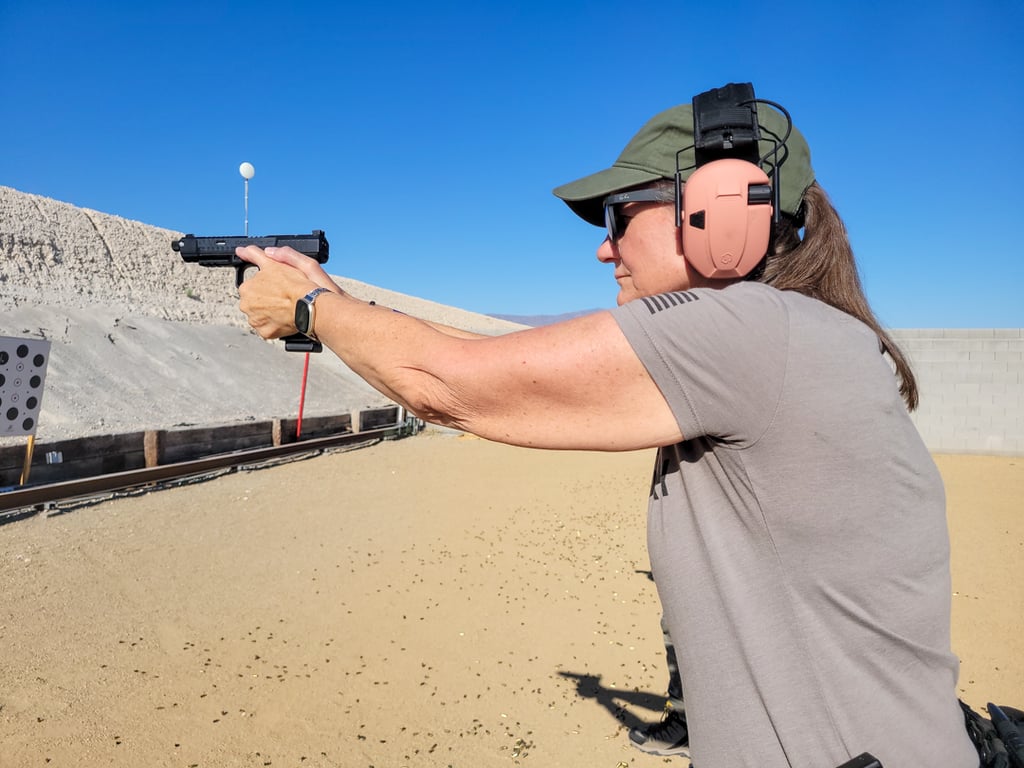
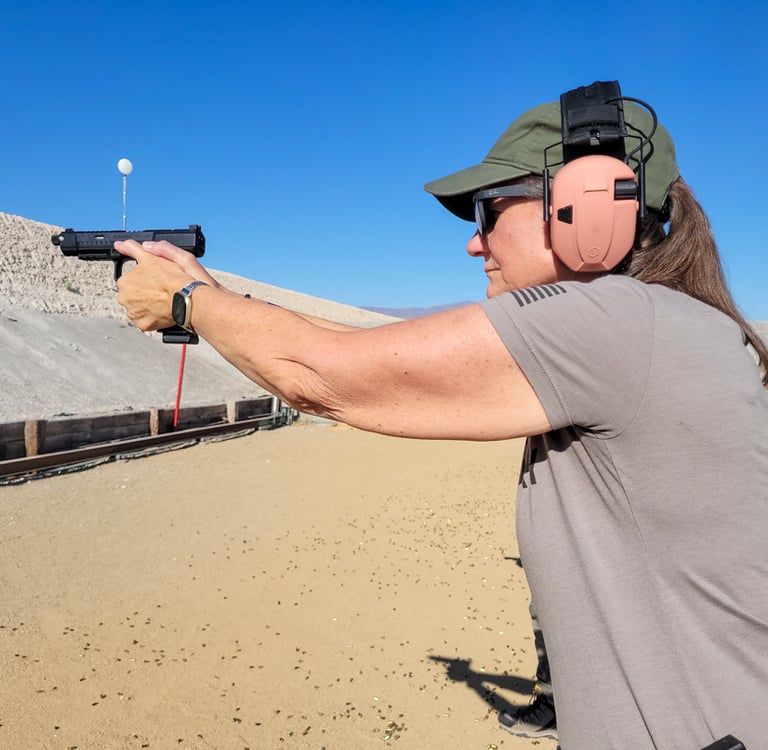
Modern defensive pistol training looks different. Most instructors today teach a variation of the Modern Isosceles stance—an athletic shooting posture with slightly bent elbows, shoulders rolled forward, and an aggressive thumbs-forward grip to maximize surface contact with the gun.
Training organizations such as the Mid South Institute pioneered this shift by introducing high-speed, high-efficiency shooting concepts to elite military and law enforcement units. Their core philosophy—"do the basics better"—emphasizes that mastering economy of motion and biomechanics is what keeps a shooter fast and accurate under stress. Rather than treating shooting as a static marksmanship exercise, modern instruction increasingly treats it as a dynamic defensive skill.
Why Training Methods Change
Some shooters wonder why firearm techniques change at all if the old ways "still punch holes in paper." The answer is simple: instructors are constantly learning.
Advancements in training are heavily influenced by a data-driven approach to human performance:
Real-world defensive encounters: Analyzing dashcam, bodycam, and surveillance footage to see how humans actually react under life-or-death pressure.
Competitive shooting performance: Competition shooters constantly search for ways to shoot faster and more accurately, proving which mechanics yield the highest efficiency.
Improved understanding of biomechanics: Utilizing natural human reflexes and body alignment rather than fighting against them.
Modern firearm design and optics: The massive rise of red dot sights (RDS) on pistols has naturally altered how shooters track targets and manage their sight picture.
Force-on-force training experiences: Using non-lethal training ammunition to test how techniques hold up against a thinking, moving adversary.
The Performance Bottom Line: What matters most is not whether a technique is “old” or “new,” but whether it helps shooters perform safely, consistently, and effectively when it counts.
Case Study: The Pillars of Modern Methodology
To understand how these evolutionary shifts work in practice, we can look at legendary institutions like the Mid-South Institute of Self-Defense Shooting. For decades, Mid-South has trained elite military units and law enforcement agencies by shifting away from rigid, static target shooting and focusing entirely on a core philosophy: true self-defense requires instinctive, stress-conditioned responses.
Their approach is built on achieving "unconscious competence"—teaching students to handle weapons and react to threats through pure muscle memory and realistic situational application, stripping away the need for conscious, deliberate thought under pressure.
This modern training framework relies on four distinct pillars:
1. Natural Point of Aim (NPA)
Instead of relying entirely on slow, traditional sight alignment for every single shot, students learn to align their body posture so that the weapon naturally zeros in on the target. This heavily reduces reaction time and visual lag in high-stress, close-quarters scenarios.
2. The "Combat Triad"
Modern defensive capability isn't just about punching a bullseye. True readiness balances three interconnected elements, originally conceptualized by firearms authority Jeff Cooper and refined by modern tactical schools:
Mindset: The mental preparedness and situational awareness required to detect and face a threat.
Gun Handling: The mechanical manipulation—reloads, malfunctions, draws—done purely on sub-conscious muscle memory.
Marksmanship: The ability to deliver effective hits quickly under duress.
3. Stress Inoculation
Standing on a flat, calm indoor range doesn't prepare the human brain for an adrenaline dump. Modern training utilizes dynamic, high-pressure ranges and live-action "kill houses" to force cognitive processing under duress. By exposing shooters to controlled chaos, it builds resilience, tames the heart rate, and fosters calm decision-making during physical stress.
4. Biomechanical Adaptability
Rather than forcing students into rigid, "textbook" stances that only work on flat concrete, modern methodology teaches foundational mechanics that allow individuals to adapt. Whether shooting around a vehicle, from a kneeling position, or inside a tight hallway, the focus is on applying core principles to unexpected environments.
Bringing the Modern Standards Home
This is exactly why defensive shooting looks so different today than it did thirty years ago. The goal isn't to look pretty on a firing line; it’s to build a resilient, adaptable human being who can solve a high-stress problem safely and efficiently.
Fundamentals Still Matter
Even though techniques evolve, the fundamentals remain timeless. Modern techniques may refine how these fundamentals are applied, but the core principles of responsible firearm use remain entirely unchanged. No matter the era, quality firearms training still depends on:
Safe firearm handling as the non-negotiable foundation.
Trigger control to deliver the shot without disturbing the alignment.
Sight management, whether tracking a traditional front post or a red dot crisp reticle.
Situational awareness to identify threats and assess the environment.
Consistency through practice to build reliable muscle memory.
Staying Open to Continued Learning
One of the best traits a shooter can develop is the willingness to keep learning. The firearms community continues to evolve, and even experienced shooters often discover new techniques or concepts that improve performance and efficiency.
Good training is not about chasing fleeting trends—it’s about understanding why techniques work and being willing to adapt when better, safer, or more efficient methods emerge. Whether someone trained decades ago or is brand new to shooting, continued education remains one of the most valuable investments a shooter can make.
Firearms Training in Carson City, Nevada
At Cadence Defense, we believe training should combine proven, timeless fundamentals with modern, practical instruction. Our courses focus on safety, performance, and real-world application while helping shooters build confidence and skill in a supportive, professional learning environment.
Whether you’re a beginner picking up a handgun for the first time or an experienced shooter looking to refine your technique for the modern era, ongoing training helps ensure your skills continue to grow alongside the evolving world of firearms instruction.
Ready to Elevate Your Training?
Don't rely on yesterday's habits for tomorrow's safety. Explore our upcoming Cadence Defense training courses in Carson City and experience modern firearms instruction focused on safety, performance, and practical application.
Questions?
Reach out anytime. We're happy to help.
Call/Text/Email:
CadenceDefense@gmail.com
(775) 453-4455
© 2025, 2026 Cadence Group LLC. All rights reserved.


